Hardware
The same hardware has two prices, and the gap is the rocket.
You specify a satellite's slots on the pad, where a module costs the part. You can also
change them later — a servicing vehicle flies out, berths, and swaps them — and there the
same module costs the part, the vehicle, the reach to that altitude and half a day of
berthing. Five to twenty times more. That is not a balance decision, it is the one
genuinely true thing about servicing, and it is why a mis-designed satellite is worth
rescuing rather than writing off.
There is a second half to the asymmetry: mass counts on the pad and nowhere
else. A lighter wing specified at launch frees bus mass for propellant, and the
identical wing fitted in orbit cannot, because by then the mass budget has been spent on
a structure that is already built. The one flight that can change that is a new tank,
fitted with what was in the old one transferred across. So the ground fit is the better
buy per module, and the orbital one is what you pay when it has to be this
satellite, in this orbit, carrying this payload — which is still
cheaper than a second rocket.
Propulsion
Reach and response together
Exhaust velocity decides what a fixed mass of propellant is worth, so this is
the one fitting that moves how far a satellite can go. Thrust and exhaust velocity
only fight each other at a fixed electrical power, and a bigger power budget buys
both — so the ion drive reaches ten times as far on the same tank and
finishes in minutes a manoeuvre that took the standard engine an afternoon. It is
the better engine outright, and it is priced like it.
- HET-3
- 300 s · hours
- ION-X9
- 3,000 s · minutes
Power
Only pays in shadow
A wing's output buys you nothing in sunlight — it pays inside an eclipse, and how much
of an orbit that is belongs to the orbit rather than to the catalogue, so the same
wing is worth more on some satellites than on others. The concentrator puts its cells
on a narrow strip behind its own optics: brighter per square metre, lighter, and
better shielded, all at once. Swapping it in flight moves total collection by single
digits; specifying it at launch moves range by a quarter, because that is where mass
counts.
- SAW-2
- 100 W/m² · standard
- CONC-9
- 165 W/m² · lighter
Every open slot is a ladder that starts at the module the satellite launched with:
nothing in the catalogue sits below the stock fit, and the build asserts that every figure
a card prints climbs with its price. Seven are open — the imaging telescope, the intercept
receiver, the bus camera, the engine, the tank, the wing and the antenna — and every one
of them can be specified on the pad or swapped later by a servicing flight, once the part
has been researched.
Each ladder climbs inside a fixed satellite. The bus is built on the pad, and the
ceilings — the deployable area the structure can carry, the aperture of the camera, the
reflector the signals bay unfolds, the mirror behind the telescope — are the same on every
design, and no module raises one. Two slots move how far a satellite can go: the engine,
which re-values a fixed mass of propellant, and the tank, which holds more of it, and
together they are worth a tenfold gain in range. A refit that buys either lands under a
fresh launch of the same design carrying the same fit, measured one slot at a time. A
mission that swaps several bays at once is buying several upgrades, and adds up past a
launch, which is legible rather than broken.
What a satellite carries
Every design in the catalogue has the same ten bays with the same six
filled, and the only difference between any two of them is which payload
bay that is. That is deliberate and it is tested, because a hull with an extra bay is the
upgrade tree arriving as hardware — one bus strictly better than another with
nothing given up on the other side. The one exception proves it: the comms relay
some older campaigns still fly carries five, because its antenna is the payload
rather than the umbilical. An empty bay
reports no options and no price, because offering a choice the airframe cannot take would
be advertising.
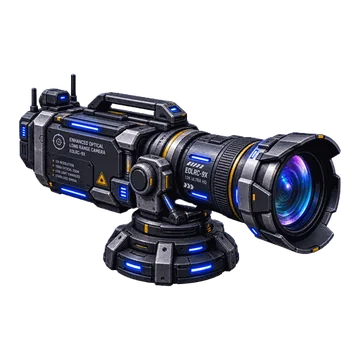
Optical — the imaging telescope
EOLRC-9X
Optical
The standard telescope, and what every collection figure in the game is quoted against. Reads features a few metres across from low orbit, and collects fastest at a low sun angle — shadows are what make structure legible. On a night target it works at a fraction of its rate. The rungs above it fix that.
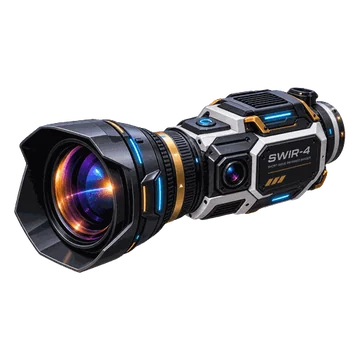
SWIR-4
Optical
A short-wave infrared channel that reads through haze and thin cloud the standard telescope can't see past, fused with a visible channel to come out sharper than stock despite the longer wavelength. Holds a useful rate well after sunset, and its wider focal plane covers more ground per pass. The first step up.
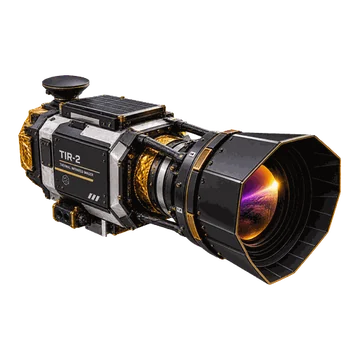
TIR-2
Optical
A cryocooled thermal channel that sees emitted heat rather than reflected light, so a site works almost as well at three in the morning as at noon — fused with a visible channel to stay sharper than stock. Wider again across the track, and faster on every target than the rung below it.
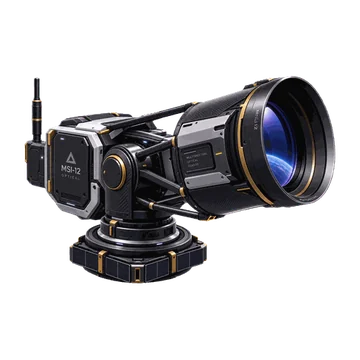
MSI-12
Optical
The top of the bay, and the largest single upgrade in the catalogue. A violet channel out-resolves the standard telescope by a third on the same mirror, a thermal channel keeps it working long after dark, and a steering mirror sweeps half again the ground either side of the track — so it finds more targets and finishes each of them faster. It costs more than most satellites.
SIGINT — the signals receiver
WBR-4
SIGINT
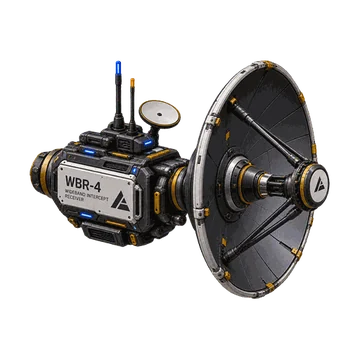
The standard receiver, and the only thing in the bay that hears everything. It digitises the whole band at once, so nothing on the ground is off its list and nothing on the ground is easy: an emitter has to stand above forty gigahertz of noise. No sun gate at all — a site at three in the morning is exactly as workable as one at noon, which is why the night side of the globe is never a closed door.
NBR-9
SIGINT
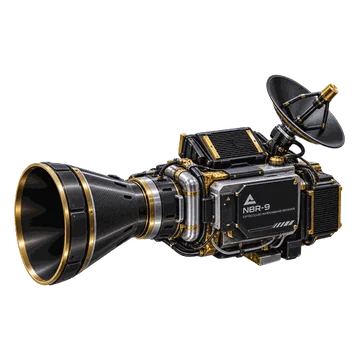
Cools its front end to a few tens of kelvin and slices the survey band into channels a few megahertz wide, so it works against a channel's noise floor instead of forty gigahertz of it. Everything the standard set can hear, heard about half again as fast, on a lighter and longer-lived box. The first real step up in the bay.
MBR-16
SIGINT
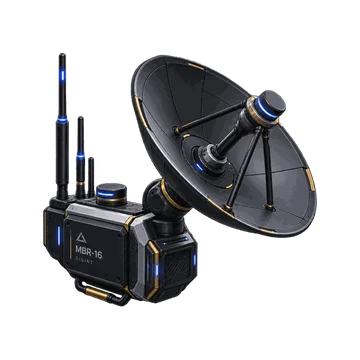
Sixteen cooled digital beams formed off the same reflector, so the bay works several emitters at once instead of taking them in turn — nearly twice the standard set's rate against everything on the ground. The best receiver in the game, the most expensive thing in the bay, and there is nothing it is worse at.
Camera — the engineering camera
VMC-1
Camera
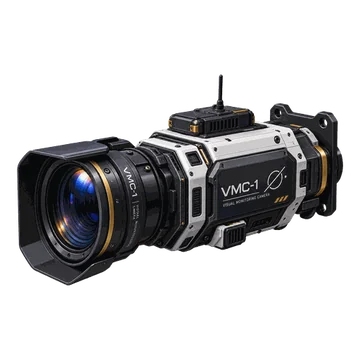
The small engineering camera every design carries — the same 10 cm aperture on all of them, because a bigger one is a different satellite. It never earns you anything; it is how you see, not how you are paid. What it can resolve is pure Rayleigh: about 4 m on the ground from a 620 km imager, about 240 m from geostationary, and about 7 mm alongside a neighbour a kilometre away. Clarity is bought with propellant and geometry, never with credits.
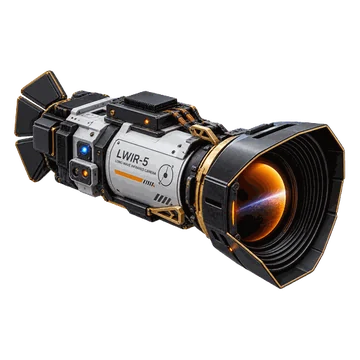
LWIR-5
Camera
A cooled thermal camera that reads a target's own heat, so a satellite sitting in Earth's shadow photographs exactly as well as one in full sun — the one thing the standard camera can't do at any range. A visible channel alongside it keeps the detail finer than stock, on a wider field.
NUV-3
Camera
An ultraviolet channel gives the finest detail a single frame through the bus aperture can deliver — almost twice the stock camera, because the diffraction limit scales with wavelength — on a wider field, with a thermal channel that keeps working on a satellite in Earth's shadow. Sharp enough for a good picture of another satellite and everything it carries, and it has caught things in frame that nobody has explained.
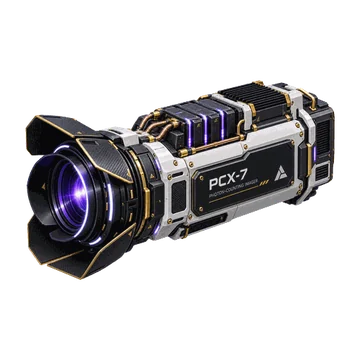
PCX-7
Camera
The top of the slot. A photon-counting sensor stacks hundreds of short frames on top of each other, so it resolves finer than any single exposure through the same aperture can — the best camera in the game on every figure its card prints. Everything the ultraviolet camera sees about another satellite, from further away, and fast enough to hold a lock on things in frame that nobody has explained.
Propulsion — the engine
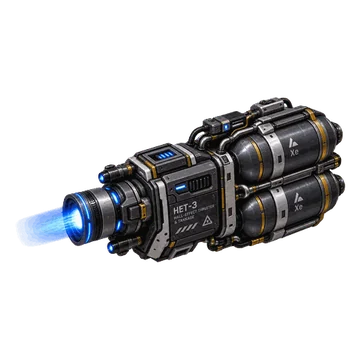
HET-3
Propulsion
The standard engine, and what every capacity figure in the catalogue is quoted against. Enough shove to reshape an orbit inside a few hours and enough efficiency to do it more than once. Exhaust velocity decides what a fixed mass of propellant is worth, so what an engine swap changes is not how much the bus holds but how far it goes.
R4-MONO
Propulsion
Four hydrazine chambers with an electric arc in each nozzle, doubling what a tank of propellant is worth against the standard engine and firing all four at once when you want the burn over with. Twice the reach of the standard fit and seven times the shove — the fit for a satellite you expect to keep moving.
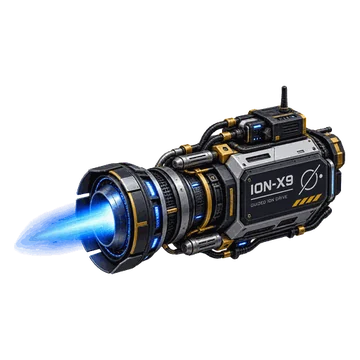
ION-X9
Propulsion
The largest power budget the bus will carry, spent on a gridded ion array. Ten times the reach of the standard fit out of the same tank, and sixteen times the shove — a manoeuvre that took the standard engine an afternoon is over in minutes. The best engine in the catalogue, and priced like it.
Tankage — the propellant tank
STD-4
Tankage
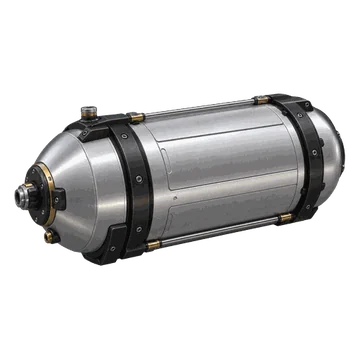
The aluminium-lithium standard, and what every capacity figure is quoted against. It does not wear out early, and everything above it holds more and wears out later still. The tank is the one fitting that changes how much propellant a bus holds rather than how far that propellant goes.
ISO-2
Tankage
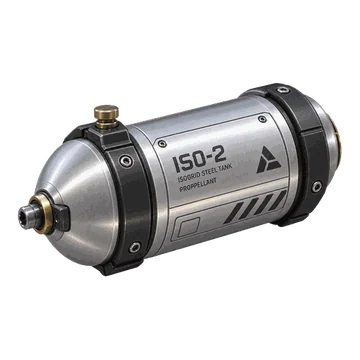
A steel shell machined into a lattice of triangular ribs, so the wall between them runs thinner than a plain tank would survive — a little more propellant for the same bay, on a material that shrugs off pressure cycling the standard alloy slowly fatigues under. The cheapest step up in the slot.
TI6-4
Tankage
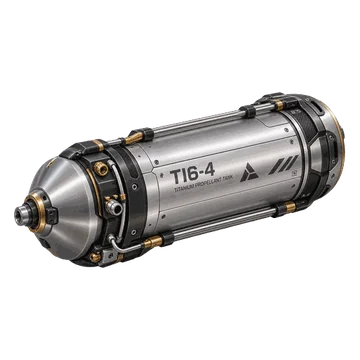
A titanium shell machined thinner than the standard alloy would survive, so an eighth more of the launch mass is propellant — and titanium takes pressure cycling better than the alloy it replaces, so it arrives at its refit in slightly better condition too. The first real step up from standard.
COW-8
Tankage
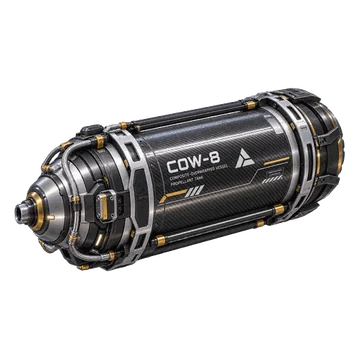
A carbon-wound shell a fraction of the mass of a metal one at the same volume, so a quarter more of the launch mass is propellant. The overwrap carries the pressure load in fibre rather than in metal that fatigues, so it ages slower than the bus around it, and every refit for the rest of its life is cheaper for that.
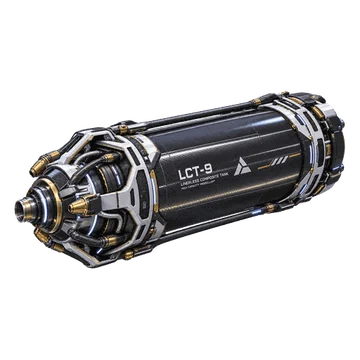
LCT-9
Tankage
No metal liner at all — the carbon shell is the vessel — which is as much propellant as this volume will ever give up: two fifths more than standard, and nothing in it to fatigue. The best tank in the catalogue on both figures its card prints, and priced accordingly. Buy it for the satellite you intend to keep.
Power — the solar wings
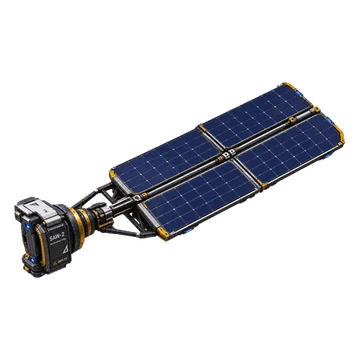
SAW-2
Power
The standard wing, rigid triple-junction cells, sized so the sunlit arc refills the battery with margin in every orbit the catalogue offers. Swapping it in flight moves total collection by single digits; specifying a lighter one at launch moves range by about a quarter, because that is where mass counts.
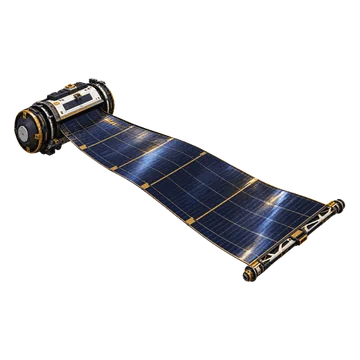
CIGS-6
Power
A thin-film blanket that unrolls off a drum instead of unfolding on hinges, so there is nothing in it to jam and nothing rigid to carry — the lightest step up in the slot, and on the pad that difference goes into the tank. About a quarter more power per square metre than the standard wing, and it ages slower for having no hinge line.
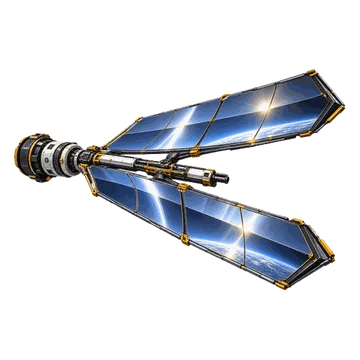
CONC-9
Power
Mirrored troughs fold sunlight onto a narrow strip of cells, for the most power per square metre in the catalogue out of the least cell area — so it is also the lightest wing here, and a launch that specifies it carries the difference as propellant. The strip sits behind its own optics, which is the best radiation shielding on any wing in the catalogue. The best wing in the game on all three figures, and priced like it.
Comms — the antenna
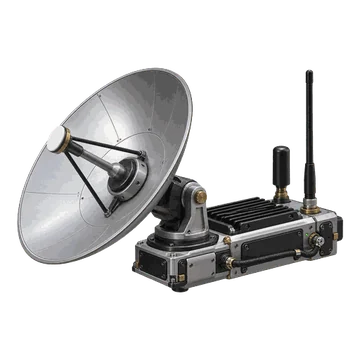
HGA-1
Comms
The standard fit: a gimballed dish that holds a narrow beam on a ground station out to the navigation belt — every orbit the catalogue offers except the highest one. From geostationary it is reaching further than its gain will carry and collection runs ahead of the downlink. The gimbal is the only mechanism on the bus, and mechanisms are what wear out. Reading another satellite’s technology across a link this narrow is five days of sitting alongside it.
OMNI-2
Comms
A dish and a pair of omnidirectional whips behind one amplifier. The whips hold a link whatever the satellite is pointing at, so nothing is lost while it slews, and the amplifier carries the dish half again as far as the standard fit. Lighter than the standard fit and slower to wear, because less of it has to move, and it halves the time it takes to read another satellite’s technology across.
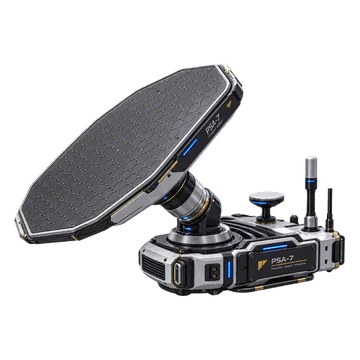
PSA-7
Comms
Steers its beam electronically, so it has nothing in it that moves — the longest-lived fit in the catalogue — and it is the only antenna here that closes a link from geostationary at full rate. A flat panel carries no reflector and no gimbal, so it is lighter than the dish as well, and on the pad that comes back as propellant. It reads another satellite’s technology across in a day and a half where the standard dish takes five. The best antenna in the game, and priced like it.
Offence — the weapon bay, researched from ECM posts and radar arrays
EW-7
Offence
A directed pulse that burns out what it hits, from any range a satellite can follow at. It carries no ammunition, but every shot takes a third of the battery and it fires only at half charge or more, and the battery refills only in sunlight: two shots from full, then a wait for the sunny side of the globe.
EW-9
Offence
The second-generation emitter: a harder pulse for less power. It draws less standing by than the EW-7, takes a quarter of the battery a shot rather than a third, fires faster, and hits harder.
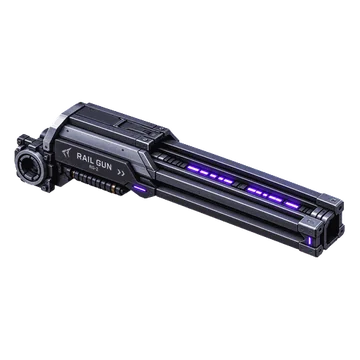
RG-2
Offence
Fires a tungsten slug at several kilometres a second from medium range or closer. Twelve rounds, a second between them, and a small draw on the battery for each. A refit restocks the magazine.
ON-12
Offence
Ten mines, fired backwards while you follow a target. A mine runs the orbit the wrong way round the globe in minutes and the target flies into it head-on, unless it has changed orbit since. Anything on the track behind you runs into it first.
Defence and hardening — two bays, coming next
ES-1
Hardening
Coming soon
Shielding against an electromagnetic pulse that would otherwise put a subsystem out. Some of what is up there fires back, and this is what will decide which parts of a satellite come through it still working.
Every module has a price, in game credits and never in real money, and it is priced on
the figure its card leads with — the telescope on what it reads, the wing on its output,
the tank on what it holds — so the dearer part is the better one and the price is the only
gate once it has been researched. What you buy is still the mission: a launch with these bays specified, or a
servicing flight that swaps them, with each bay's share of that flight printed on its card
and the whole bill under them. See progression. A kill pays
nothing: no credits and no research. What a weapon buys is the target gone, or its
recorder silenced. The defence bays are shown empty on purpose until the hardware behind
them exists — an empty slot with a reason is honest, and an empty slot with a price on it
would be a shop again. Everything marked Coming soon is
next.