Sell what you see
Hunt out other governments' hidden sites, bring a satellite over them on a real orbit, and sell the intel. Every finished site pays credits and research, and the sites you choose decide which upgrades you unlock.
They came to shut your black-budget programme down, so you took it rogue: the satellites, the stealth launch site, all of it. Fly over other governments' secret sites and sell what you find. Then the other nations' satellites in your sky start to matter — shadow them, steal their technology, arm your own and take them out. And somewhere in that arms race, your cameras start catching things that answer to no registry at all.
Out now on iPhone and Android. Free to play — no accounts, no tracking.
A campaign opens on one satellite and a map of other people's secrets. What you collect buys better hardware, the better hardware notices more, and what it notices changes the game you are playing.
Hunt out other governments' hidden sites, bring a satellite over them on a real orbit, and sell the intel. Every finished site pays credits and research, and the sites you choose decide which upgrades you unlock.
Foreign satellites share your orbits. Fall in behind one and hold close to steal its technology, or drain the data it has collected. Then fit mines, a railgun or an EMP and take it out of the sky.
Objects that circle faster than any orbit should allow. Craft that come down on the open ocean, sit there for days, and leave. Photograph them, follow where the sightings cluster, recover what they leave behind, and build something that can chase them.
Four steps, and the physics decides three of them. There is no build queue and no energy meter — the thing standing between you and the payout is orbital geometry.
Secret sites are invisible from orbit. Zoom in and hunt them — every country hides one or two, placed deterministically from its own name, so the same world exists on every device with nothing stored anywhere.
Pick the satellite, pick the site. If its orbit already passes over, that is the whole order. If it does not, the game prices the move — a slower route costs less propellant, a faster one more — and you choose a row or close the sheet. Nothing is spent until you do.
The pass arrives when the orbit says it arrives, not when you open the app, and a low imager gets about four minutes over the target to work with. Collection carries on with the app closed — not because anything runs, but because it was always derivable from the orbit.
A finished site pays out, and what it pays is printed on it before you start. Intel accrues per hour of coverage, scaled by altitude, by how well the payload matches what the site gives off, and — for optics alone — by where the sun is. Spend the credits on a refit, or on another satellite.
Your camera spots what is flying near you, and the better the camera, the more it can tell you: first a blur, then a picture, then what the thing is carrying and whether it is armed. It is the inspector-satellite game real nations play in geostationary orbit, and here you get to finish it.
One close pass for a photograph. Cheap, quick, and you learn what you are dealing with before you commit to anything.
Fall in behind it at long, medium or close range and stay there. At any range you drain the data its recorder is holding, and it pays like any site you collect.
Hold close long enough and you take its technology home, as research you did not have to collect. A better antenna takes it in hours rather than days.
Mines fired backwards round the orbit so the target flies into them head-on. A railgun at medium range. EMPs that reach from long range but drain the battery, which recharges only in sunlight.
Weapons are researched like every other upgrade, from the ECM posts and radar arrays you collect. A fight is always one you started, and you can always pull back: disengage, and it is over.
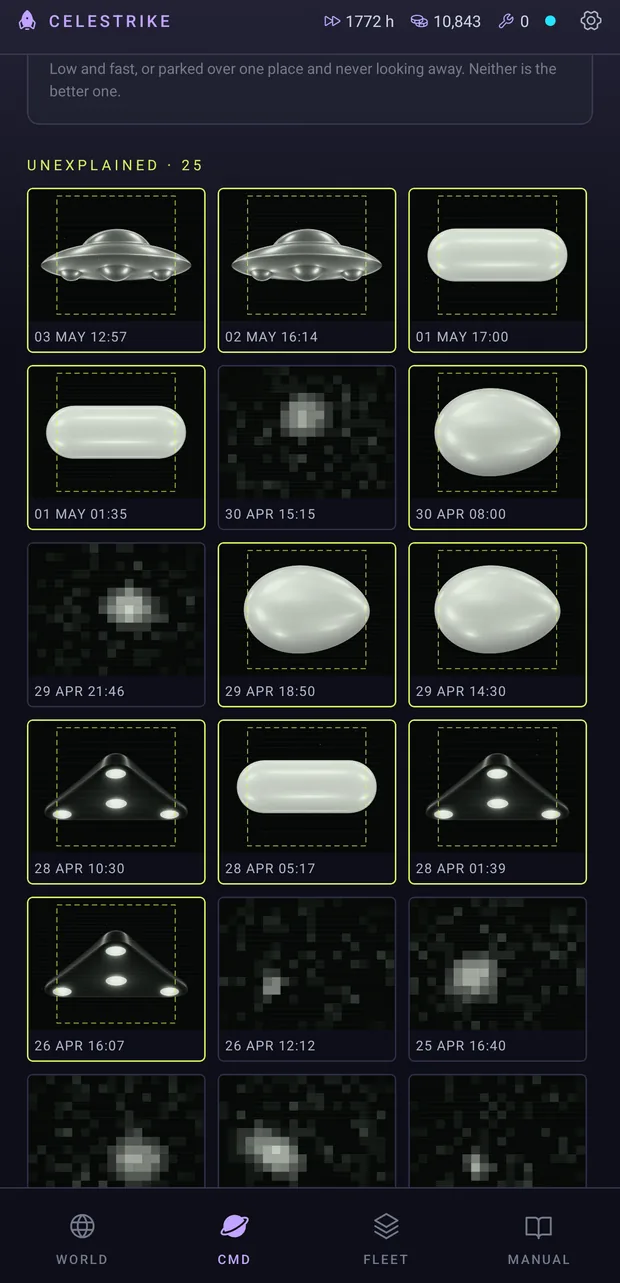
Among the foreign satellites are objects with no registry and no nation, going round faster than an orbit should allow. The stock camera sees a smear, and a smear is also what a distant spacecraft looks like, so for a long time you cannot tell which you caught. Fit the best camera and a contact finally holds still in frame. The game never tells you what they are.
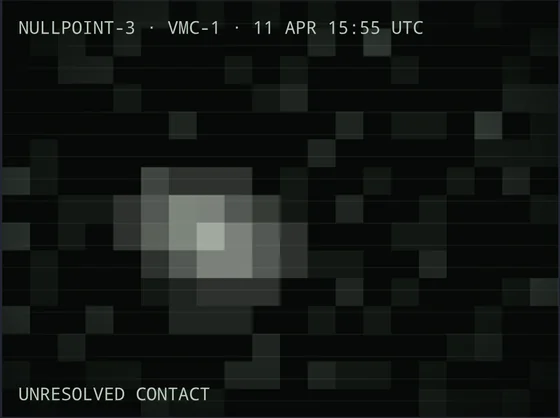
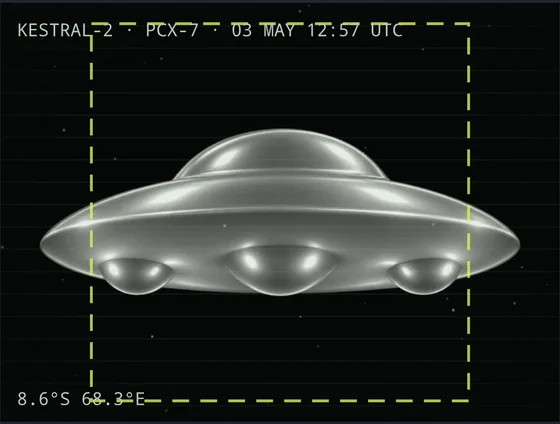
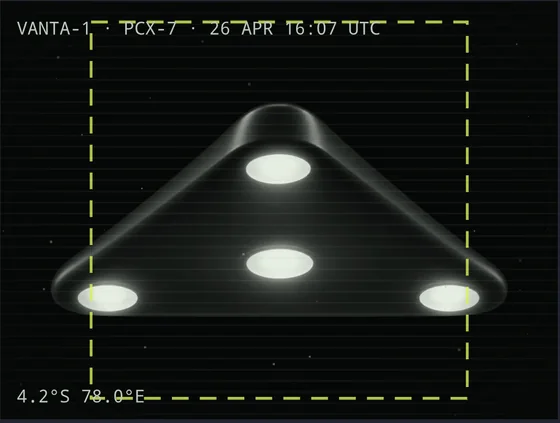
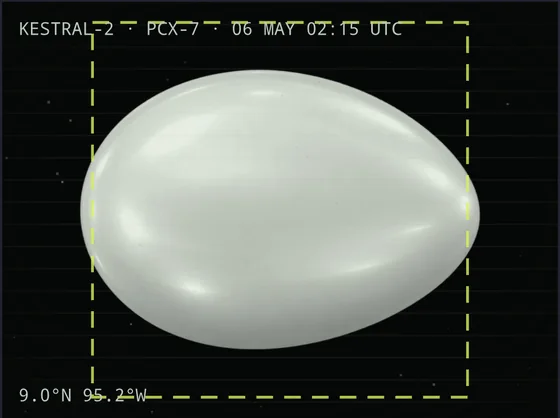
Every photograph goes into a log, and plotted, the log starts to cluster: never on a point, always on a region. Follow it with a thermal imager and you find heat signatures where nothing should be built, out on the open ocean and under the polar ice.
A craft flies a few low orbits and comes down for a few days. Catch it on the way down, identify it, and send a recovery team from your home base, while it sits there or to the disturbed ground it leaves. What comes back is a reactor core, a gravity-wave emitter, a metamaterial panel. The assay on one sample reads element 115.
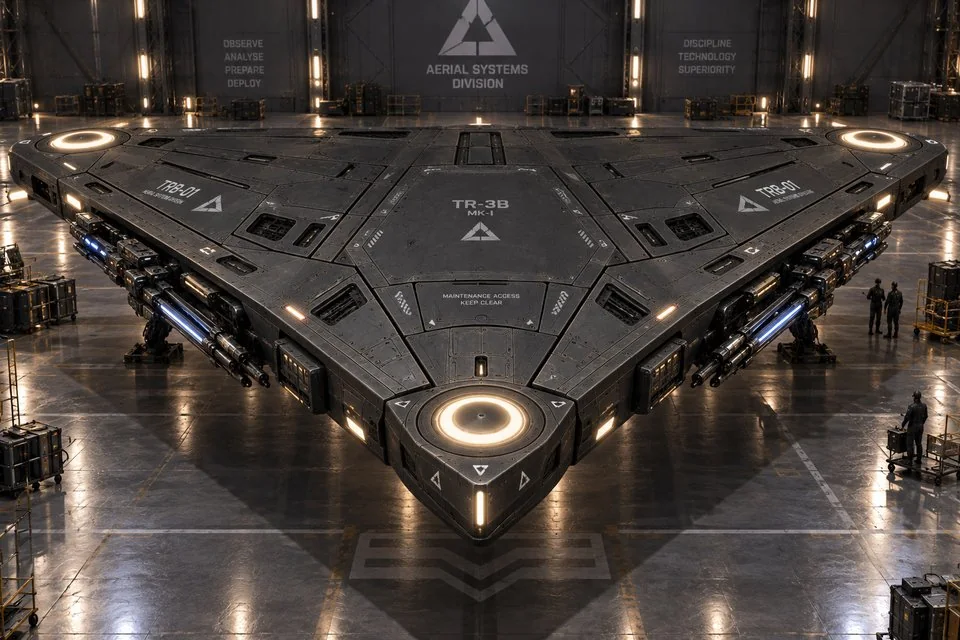
Recovered parts build the TRB-01, the one craft credits alone can never buy. It is fast enough to chase a craft in flight, and when it catches one you fight it yourself, steering with one thumb and firing guns and an EMP burst with the other. Bring it down and the wreck is yours to recover.
If you know the Black Knight story, keep an eye on low orbit. Something up there has been going round for a long time, and it does not like being shot at.
It takes a while to get here. Sightings are rare, the first ones are smudges, and no photograph ever pays: the only way to profit from the unexplained is to go out and get it.
Captured from the shipping build — the same frames that go to the App Store listing. Nothing here is a mock-up of a panel or a number typed in for the picture: every figure on these screens was produced by the propagator at the instant the shutter went.
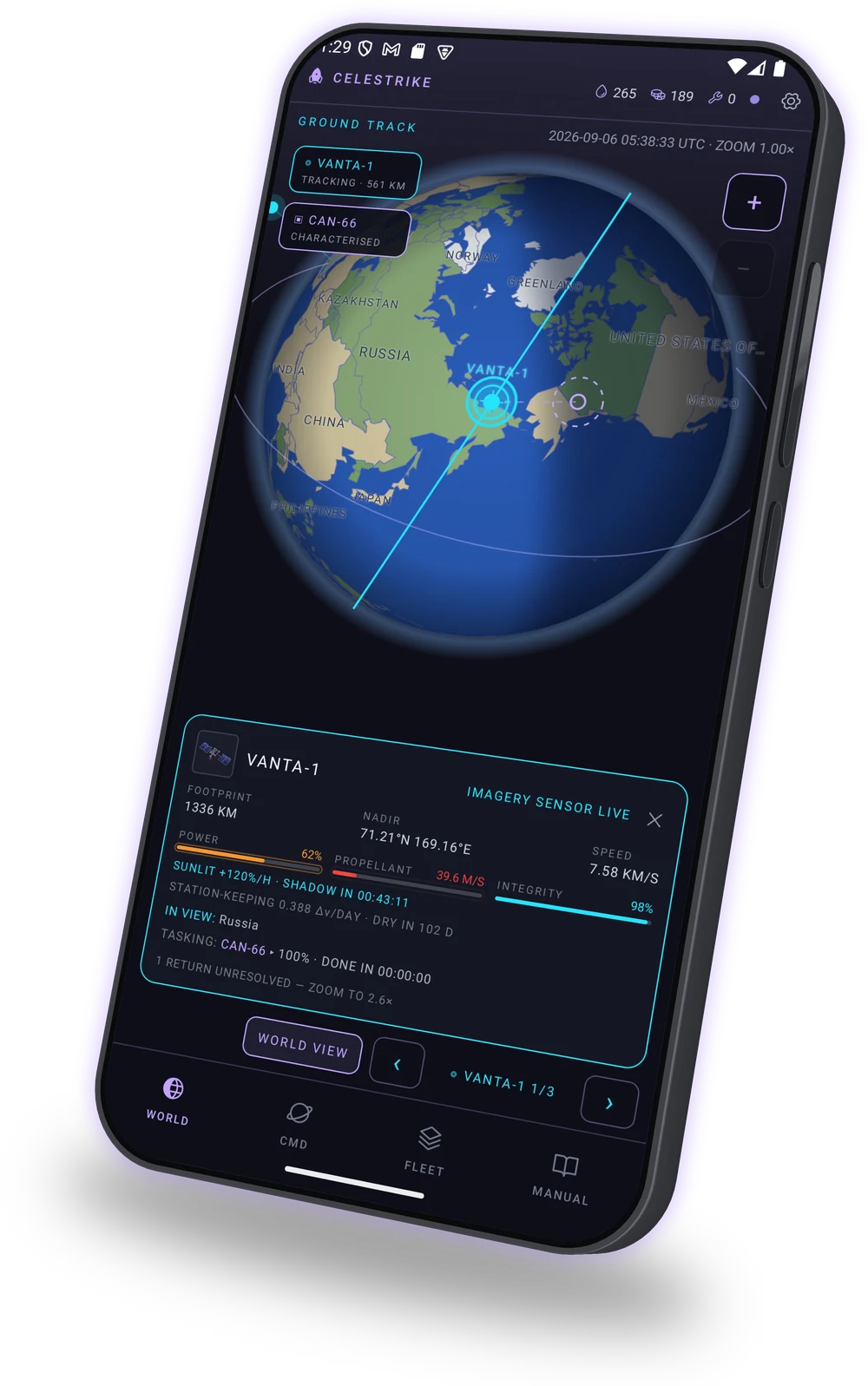
The cyan line is where the satellite goes, not where its plane is — each point rotated by the Earth's own angle at the moment it arrives there. The dashed ring is the site it has been tasked on.
Footprint, nadir, speed, charge, propellant, condition. Every one is the orbit plus the clock, which is why the numbers are right after a week with the app shut rather than right because something was left running.
The sun is in the model, so the terminator drawn across the globe and the battery on the panel are the same fact stated twice. It gates optics and nothing else — an emitter emits at three in the morning.
Station-keeping costs this satellite 0.388 m/s a day and there are 39.6 left in the tank. The endurance figure is on screen before anything is spent, because running out has to be something you were told about and chose.
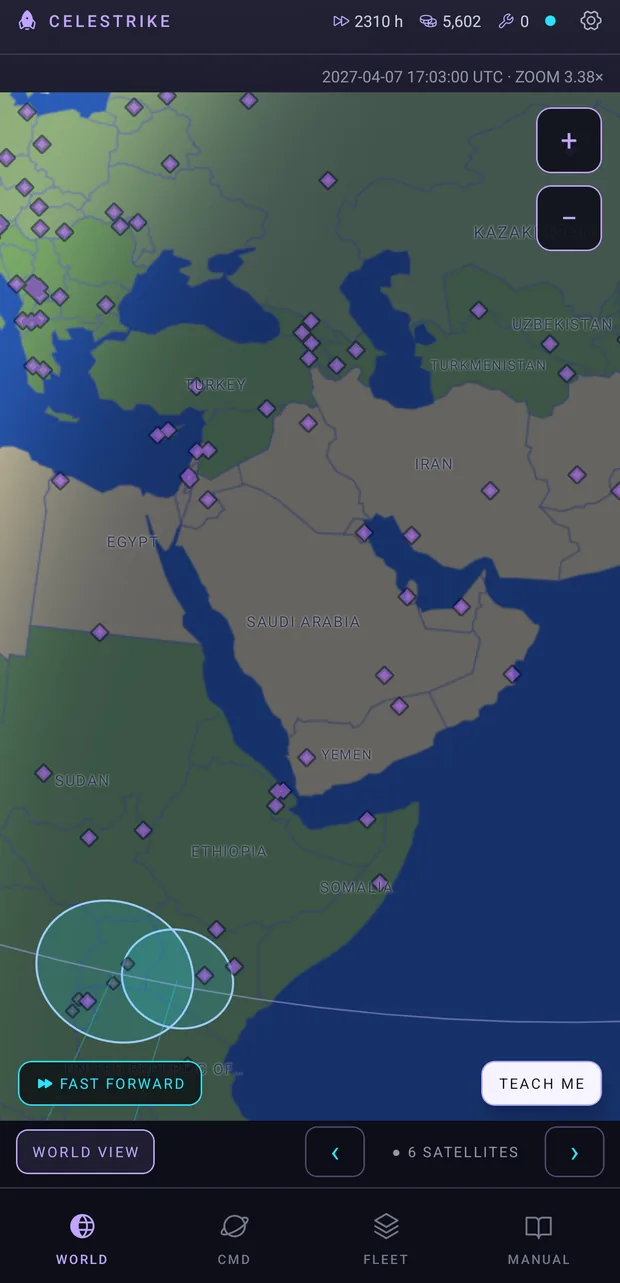
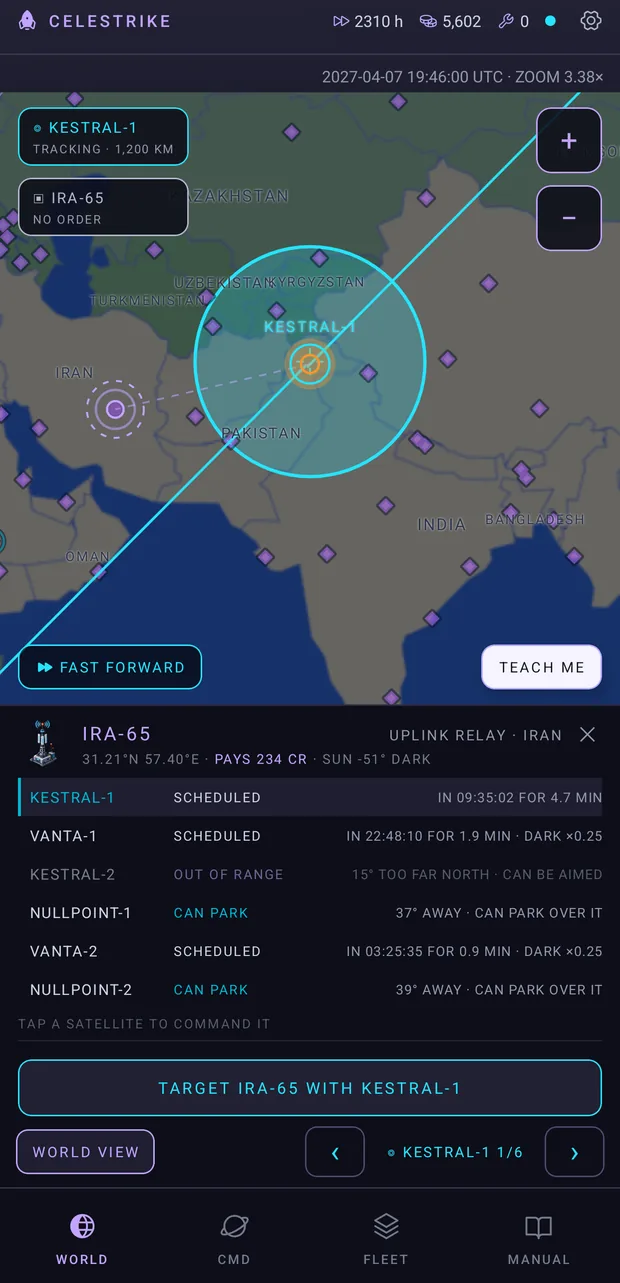
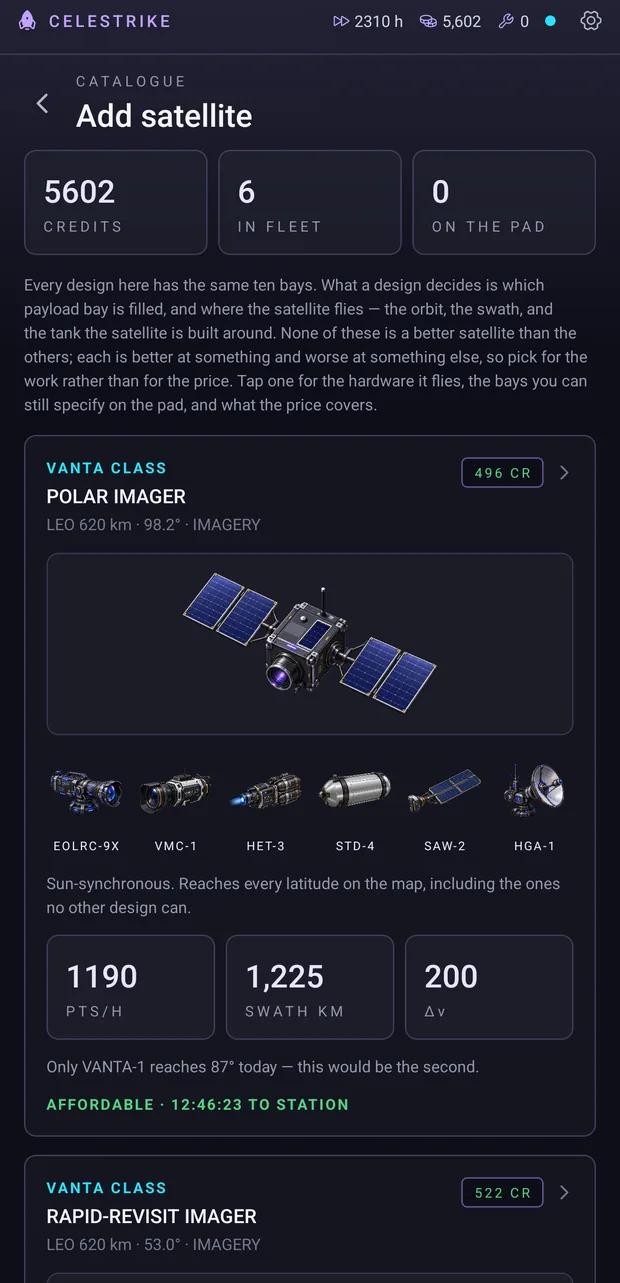
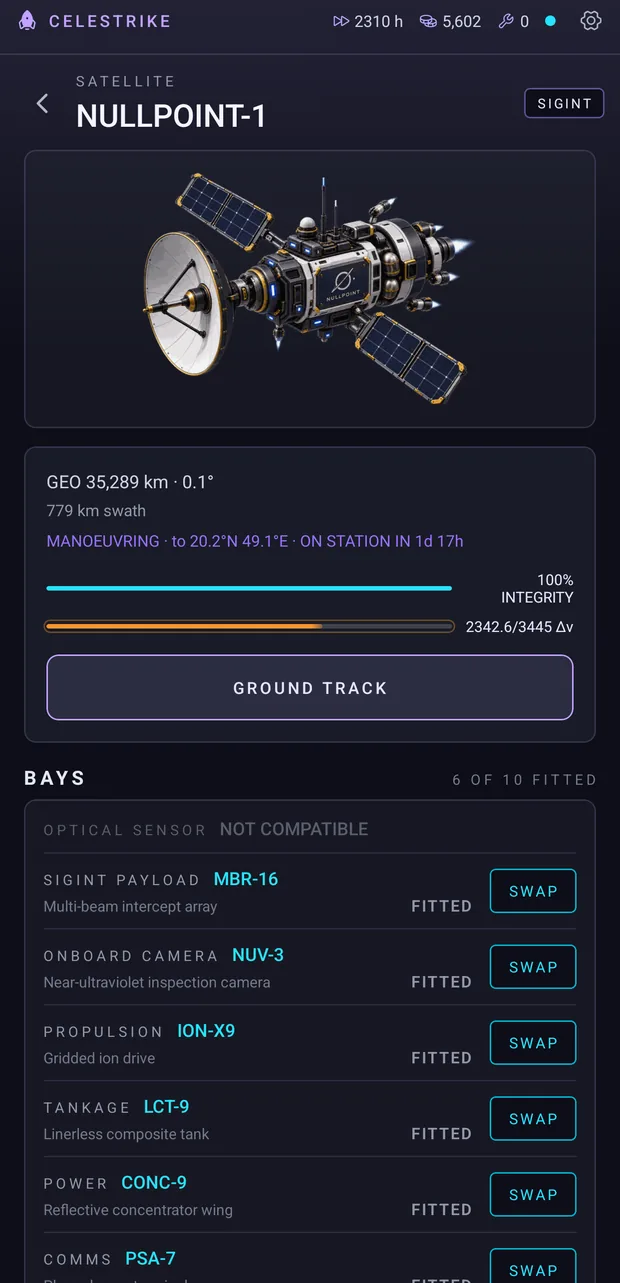
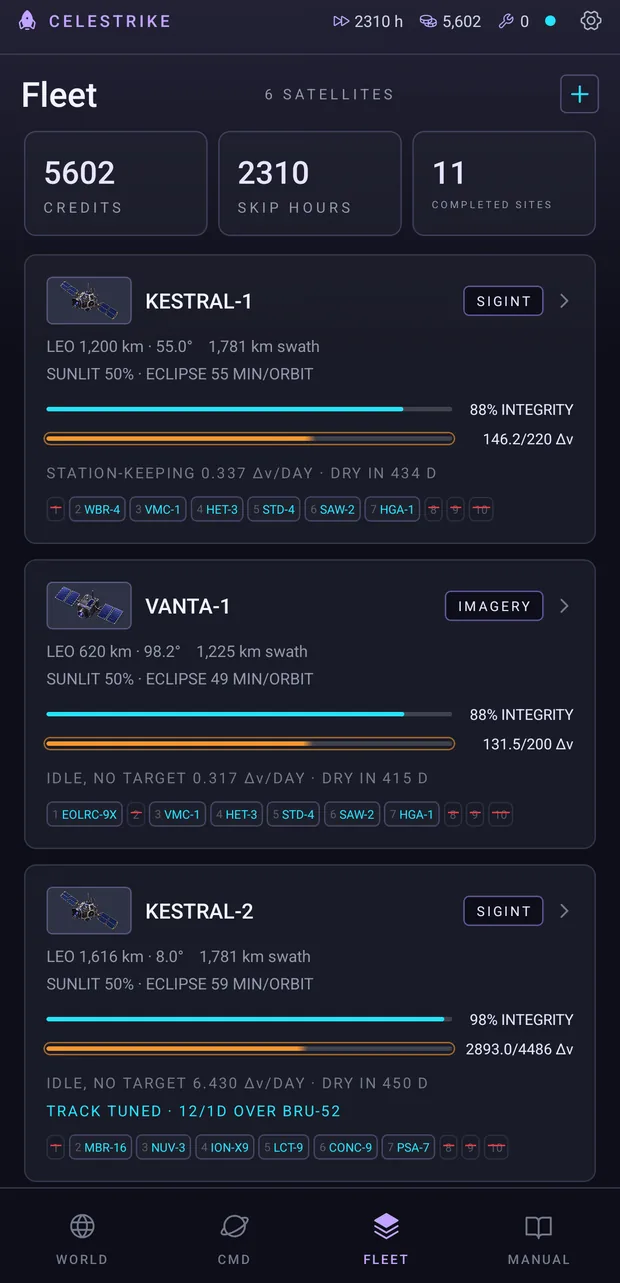
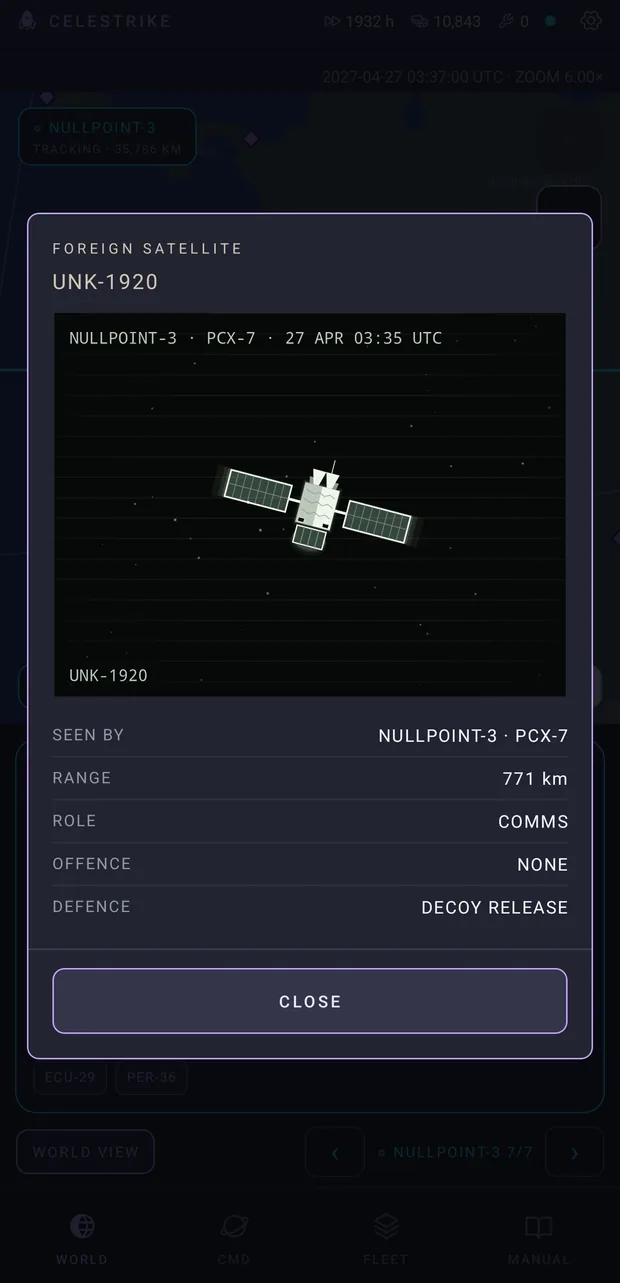
Captured on Android, because that is the hardware the build is soaked on. The app lays out at the same point size there as it does on a 6.5-inch iPhone, so nothing above has been upscaled or restaged — what has been cropped off the top and bottom is the phone's own clock and its gesture hint, and not a pixel of Celestrike.
A campaign opens on a single signals satellite, and the first site it finishes pays a training award big enough for a second satellite on any airframe in the catalogue. From there it is three hulls and three problems, and their differences are entirely physical. A callsign is a hull class and an index, so the picture and the name always agree: your second imager is VANTA-2 on the same airframe as the first.
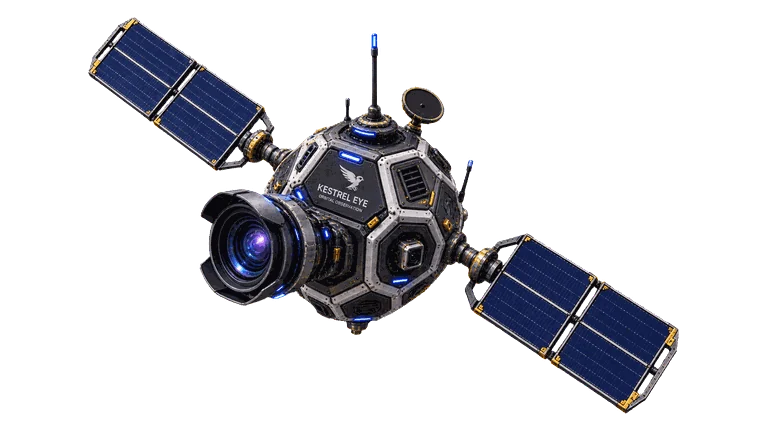
The satellite you start with. It listens, so the clock over the target means nothing to it — a site at three in the morning is exactly as workable as one at noon, and your first target never stalls because it happened to be dark.
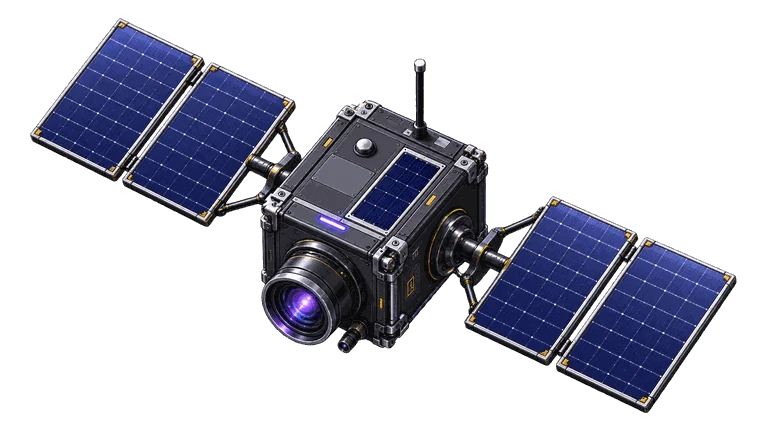
The sharpest thing you can own, and the busiest. The polar design reaches every latitude on the map; both lose part of every revolution to Earth's shadow, and only work when the sun is up over the target.
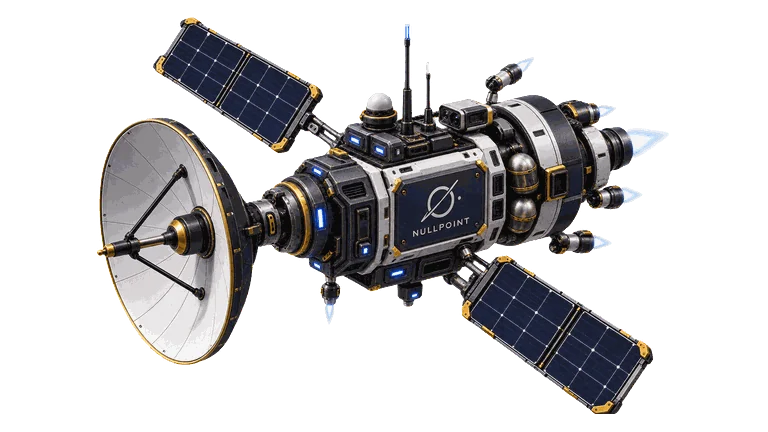
Bought over a named region — Europe East, say, or a spot on the equator — and it arrives already parked there. It can be walked over any point on the globe afterwards, but hovering away from the equator costs propellant every day, and it has the smallest tank in the catalogue.
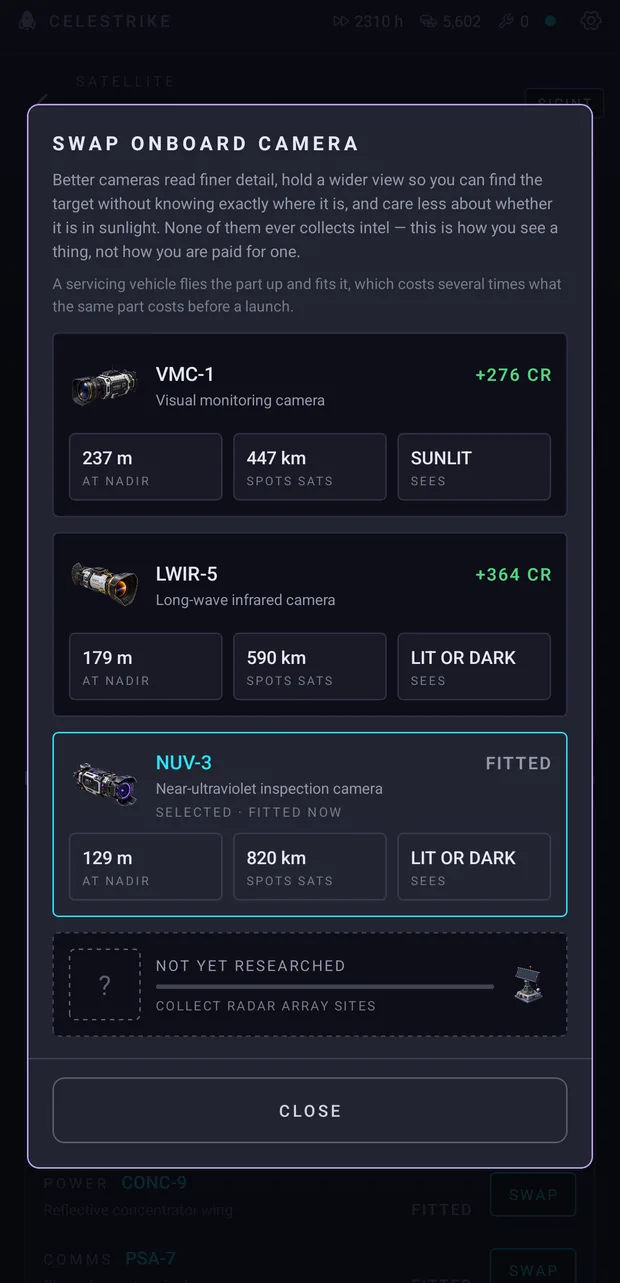
Ten equipment bays on every hull, filled by group. Eight can be swapped for a better part — on the pad before launch, or by a servicing flight afterwards — and the pricier part is always the better one, never a sidegrade. Every part above the one a satellite launches with has to be researched first, from the intel you collect: launch pads teach engines and tanks, radar arrays teach optics, and so on. How the pricing works →
The imaging telescope. A better one reads finer ground detail, sweeps a wider strip on each pass, and keeps working after dark.
The signals receiver. A better one hears fainter, more distant emitters — and day or night makes no difference to it either way.
The small engineering camera every satellite carries. It never earns credits — a sharper one just lets you see farther and finer.
The engine. Decides how far a tank of propellant will carry you, and how fast a manoeuvre finishes.
The propellant tank. A better one holds more and ages slower — a longer career for the satellite carrying it.
The solar wings. Keep a satellite running through Earth's shadow, and a better one is lighter too, which frees room for more propellant.
The antenna. Downlinks what a satellite has collected — a better one reaches farther without losing rate.
The weapon bay. Mines, a railgun and two EMPs that run on the battery, each hitting harder and reaching further than the one below it.
The last two bays, defence and hardening, are Coming soon. Every design carries the same ten bays, so two satellites differ only in which parts fill them — never in how many they have. See the full equipment list for every part in the catalogue.
Celestrike is free to download and free to play. The one thing sold for real money is optional: packs of in-game hours that fast-forward the whole world clock, for anyone who would rather not wait out a pass or a servicing flight. Waiting always works, you choose how many hours to spend every time, and satellites, upgrades and propellant are only ever bought with credits the fleet earns.
Not everything you photograph is ours.Free on iOS and Android · out now